How to Choose the Right Nail Gun for Your Next Project
Few decisions on a job site carry more practical weight than selecting the right fastening tool. A mismatched nailer wastes time, risks material damage, and can undermine the structural or aesthetic integrity of finished work. Whether the project involves structural framing, roofing installation, or delicate interior finishing, understanding what each nailer type offers—and where its limitations lie—makes the selection process far more straightforward. The market for nail guns spans a wide range of designs, power sources, and specializations. Navigating that range confidently starts with knowing exactly what each category of nailer was built to do.
Understanding Nailer Categories Before You Buy
Every type of nailer is engineered around a specific set of fastening demands. Buying based on price or brand recognition alone, without considering application fit, is one of the most common and costly mistakes both DIYers and new contractors make.
Breaking the selection down by category simplifies the decision considerably.
Framing Nailers: The Backbone of Structural Construction
Framing nailers are designed around one core purpose: driving large-diameter nails into heavy structural lumber with speed and consistency. They’re the tools that build wall frames, stud assemblies, roof structures, and floor systems.
Pneumatic vs. Cordless Framing Nailers
For decades, pneumatic models connected to an air compressor dominated job sites. Their combination of consistent power output and relatively low tool weight made them the standard choice for high-volume framing work.
Cordless framing nailers—powered by lithium-ion battery systems—have advanced dramatically and now offer comparable driving power without the need for hoses or a compressor. The trade-off involves slightly higher tool weight due to the battery, but the mobility advantage is significant on large, multi-story projects.
Features That Define a Quality Framing Nailer
Magazine type: Stick magazines are the most common, available in various angled configurations. The angle affects access in tight framing situations, particularly in corners and wall assemblies.
Dry-fire lockout: This feature prevents the nailer from firing when the magazine is empty, protecting both the tool and the work surface from damage.
Adjustable exhaust port: Redirecting air exhaust away from the user’s face is a quality-of-life detail that matters over long workdays.
Roofing Nailers: Engineered for High-Volume, High-Stakes Work
Roofing is one application where nailer performance directly affects weather protection for an entire structure. Improperly driven fasteners—too shallow, too deep, or misaligned—can compromise shingle adhesion and void roofing warranties.
Why Coil Magazines Dominate Roofing Applications
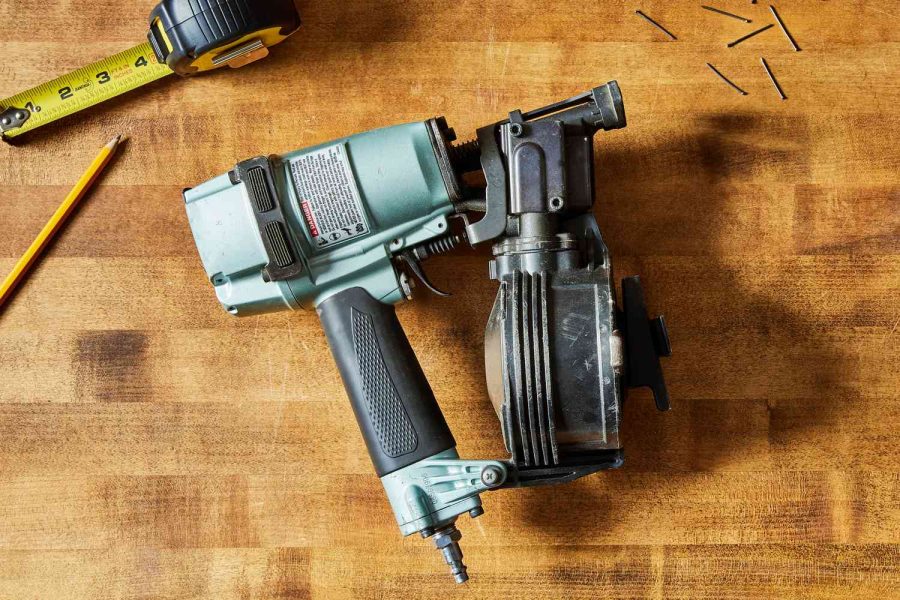
Roofing nailers use coil magazines rather than stick magazines because they hold a much larger supply of fasteners. On a large roofing project, reducing the number of reloads keeps momentum high and reduces the physical interruption of constant stops.
Coil nailers also tend to have a lower profile, which improves balance when working on angled surfaces. A top-heavy or awkward tool becomes a genuine safety concern at height.
Critical Roofing Nailer Specifications
Nail length range: Different roofing applications—shingles, felt underlayment, OSB decking—require different fastener lengths. A nailer with a broad compatible range offers more versatility.
Trigger actuation options: The ability to switch between bump fire and sequential fire gives roofers flexibility depending on the pace and precision demands of each section.
Skid-resistant base: On steep pitches, a nailer that stays where placed between shots is a practical safety feature.
Finish and Trim Nailers: Where Craftsmanship Meets Function
Trim installation is where construction transitions from structural necessity to visual craftsmanship. The tools used in this phase must protect finished surfaces while delivering reliable holding strength.
Choosing Between 15-Gauge and 16-Gauge Finish Nailers
Finish nailers are typically categorized by the gauge of nail they accept. Lower gauge numbers indicate thicker nails.
A 15-gauge finish nailer drives angled nails with excellent holding strength, making it the preferred choice for heavy baseboards, large crown molding profiles, and door and window casing in high-traffic areas.
A 16-gauge finish nailer uses slightly thinner straight nails and offers adequate holding power for most interior trim applications. The thinner nail leaves a smaller hole, which requires less filler work before painting.
Brad Nailers for Lightweight Trim Work
For thin moldings, cabinet face frames, small decorative elements, and situations where surface appearance takes absolute priority, brad nailers are the appropriate tool. Their fine-gauge nails leave holes so small they often require minimal filling, or none at all on painted surfaces.
The trade-off is holding strength. Brad nailers are not suitable for heavy trim pieces that experience significant movement or physical contact over time.
Power Source Considerations Across All Nailer Types
Beyond the specific nailer category, power source is a decision that affects workflow, mobility, and operating costs.
Pneumatic nailers require an air compressor and hose. They deliver consistent power and are generally lighter than cordless alternatives, but compressor setup adds time and limits mobility.
Cordless battery-powered nailers offer unmatched flexibility and eliminate hose management entirely. They’re particularly valuable for finish work inside completed structures where dragging hoses risks surface damage.
Gas-powered nailers use fuel cartridges and battery-driven ignition systems. Once common on large framing projects, they’ve been largely replaced by advanced cordless models in many markets.
Making the Final Decision
Selecting the right nailer comes down to three core questions: What material is being fastened? What fastener size does the application require? And what working conditions will the tool face?
Answering those questions honestly, and then matching the answers to a purpose-built tool, results in better work, fewer frustrations, and a longer tool life. The best nailer for any project is always the one built specifically for that task.