Digital economies are no longer built on isolated systems or static hosting models. They are driven by elastic compute layers, distributed architectures, and continuously adaptive platforms that respond to real-time demand. Infrastructure strategy today is less about hardware ownership and more about orchestration, resilience, and operational intelligence across environments.
Markets that scale successfully tend to align platform engineering with governance, risk control, and workload predictability. This shift places greater emphasis on operational visibility, automated defense layers, and structured architecture planning. In Southeast Asia’s growth corridor, discussions around cybersecurity in Malaysia increasingly intersect with infrastructure scalability and risk-managed digital expansion.
Infrastructure Intelligence as a Growth Multiplier
Intelligent infrastructure is not defined only by performance capacity but by decision capability embedded into the platform layer. Modern environments integrate telemetry, predictive analytics, and automated control responses to maintain service continuity under changing load conditions. This allows infrastructure to behave as an adaptive system rather than a fixed resource pool.
Such platforms monitor workload behavior, detect anomalies, and adjust resource allocation dynamically. The result is improved uptime stability and reduced operational waste. Intelligent orchestration also supports cross-environment coordination, where cloud, edge, and centralized compute layers function as a unified operational fabric rather than disconnected stacks.
Architecture Patterns Driving Platform Evolution
Platform maturity depends heavily on architectural choices made at the design stage. Modular, service-based, and container-driven models are replacing rigid monolithic deployments across enterprise and public sector technology stacks. These patterns allow selective scaling, targeted upgrades, and failure isolation without systemic disruption.
Resilient design also includes redundancy planning, fault domains, and automated recovery logic. High availability today is achieved through distributed redundancy and smart routing rather than simple backup replication. Architecture has become both a performance tool and a risk control instrument across digital infrastructure ecosystems.
Distributed Compute and Edge Coordination
Distributed compute models reduce latency and increase responsiveness for real-time applications. Edge coordination allows processing to occur closer to data sources, lowering congestion on central systems. This design improves performance for analytics-heavy and interactive workloads.
However, distributed models require synchronized policy enforcement and consistent control planes. Without unified governance, distribution can introduce operational blind spots. Intelligent coordination frameworks help maintain control while enabling geographic and functional spread.
Automation and Self-Healing Systems
Automation has progressed beyond scripted deployment into behavioral response systems. Self-healing infrastructure detects irregular states and triggers corrective actions without waiting for manual intervention. This reduces downtime windows and operational fatigue.
Automated rollback, traffic rerouting, and load redistribution are now standard in mature environments. When paired with continuous monitoring, these systems create feedback loops that steadily improve platform reliability and predictability over time.
Observability and Operational Transparency
Observability extends monitoring by focusing on internal system signals rather than surface metrics alone. Logs, traces, and behavioral patterns provide deeper operational intelligence. Teams can diagnose root causes instead of reacting to symptoms.
Transparent operational visibility also supports audit readiness and compliance mapping. It strengthens accountability structures and enables proactive risk management rather than post-incident correction cycles.
Risk, Trust, and Protection Layers in Modern Platforms
Security models have shifted from perimeter defense to layered trust frameworks. Platform protection now depends on identity control, behavioral validation, and continuous verification across users, services, and workloads. Zero-trust concepts influence how infrastructure policies are structured.
Protection layers are embedded into pipelines, runtime environments, and orchestration controls. Risk scoring, anomaly detection, and policy-driven isolation mechanisms reduce breach propagation. Infrastructure protection is therefore no longer a separate add-on but an architectural property.
Identity-Centric Control Frameworks
Identity has become the primary control boundary in platform environments. Access decisions are tied to verified attributes, contextual signals, and behavioral patterns. This reduces dependency on network location as a trust factor.
Granular identity control supports least-privilege enforcement and improves audit traceability. It also aligns with regulatory expectations around access governance and operational accountability.
Continuous Validation and Threat Detection
Continuous validation replaces one-time security checks with ongoing verification cycles. Systems repeatedly confirm integrity, configuration state, and behavioral conformity. This reduces the dwell time of hidden threats.
Threat detection engines now rely heavily on pattern deviation models rather than signature lists alone. Behavioral analytics improves detection accuracy in complex, dynamic environments.
Platform Hardening and Configuration Discipline
Configuration discipline is often the most overlooked resilience factor. Hardened baseline configurations reduce exposure by removing unnecessary services and permissions. This lowers the attack surface significantly.
Standardized templates and automated compliance checks maintain configuration integrity at scale. Hardening, therefore, becomes a repeatable operational process rather than a one-time setup activity.
Sustainability and Efficiency in High-Density Environments
Infrastructure scaling must now balance performance growth with energy efficiency and environmental responsibility. Power density, cooling optimization, and workload placement strategies are central to platform planning. Efficiency metrics increasingly influence architecture decisions.
Advanced cooling models, workload scheduling, and energy-aware orchestration help reduce operational overhead. Sustainability reporting is also becoming integrated into infrastructure governance frameworks. Efficient platforms are viewed as both economically and operationally superior.
Energy-Aware Workload Scheduling
Workloads can be scheduled based on energy availability and efficiency profiles. This reduces peak stress and distributes demand intelligently. Smart scheduling also aligns with cost optimization objectives.
Energy-aware orchestration tools help operators balance performance with resource conservation. This creates measurable efficiency gains without compromising service quality.
Thermal and Density Optimization
Thermal management has evolved into a precision engineering discipline. Density optimization strategies reduce hot spots and improve airflow efficiency. Advanced cooling designs support higher compute concentration safely.
Better thermal control improves hardware longevity and operational stability. It also lowers failure probability under sustained high load conditions.
Final Thoughts
Scaling intelligent platforms requires alignment between architecture discipline, operational intelligence, and structured protection models. Performance alone is no longer the benchmark; resilience and governance maturity define long-term success. Regional conversations around data centre Malaysia increasingly reflect this integrated approach to scalability, sustainability, and risk control.
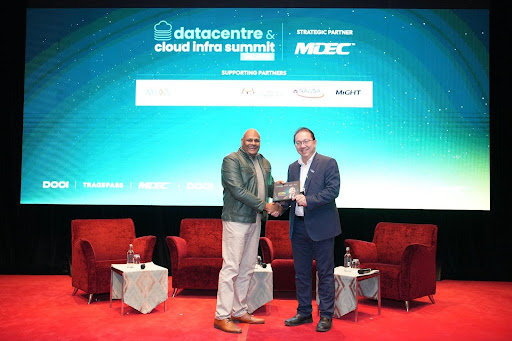
Industry gatherings such as DCCI 2026 in Malaysia focus on these themes through expert discussions on infrastructure resilience, cloud evolution, AI workloads, efficiency engineering, and security frameworks. Such forums contribute to ecosystem knowledge without replacing independent evaluation, offering a consolidated view of where intelligent infrastructure strategy is heading next.